Firebox Refractory Repair: Protecting Your Tacoma Fireplace from Heat Damage
Cracked firebox panels and crumbling mortar can turn a cozy Tacoma fireplace into a fire hazard. Learn how to identify and fix refractory damage before winter.
Understanding Your Fireplace Firebox
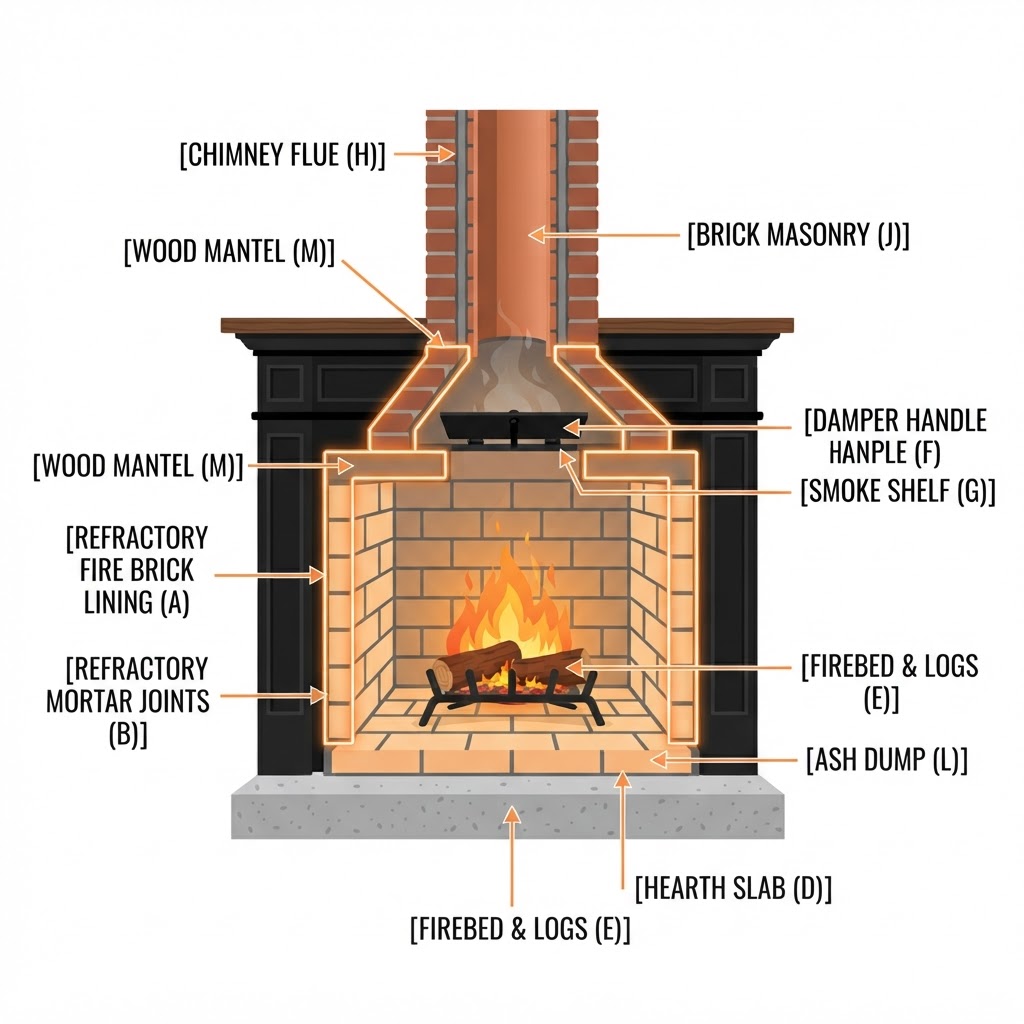
The firebox is the heart of your fireplace, designed to withstand temperatures up to 2,000°F. In Tacoma homes, whether you are in a historic North End craftsman or a newer build in University Place, the firebox is lined with refractory materials—either firebricks with specialized mortar or prefabricated refractory panels. These materials are engineered to contain intense heat and protect the surrounding structure of your home.
Over time, the constant thermal cycling of lighting and extinguishing fires causes these materials to expand and contract. In our damp Pacific Northwest climate, this process can be accelerated by moisture intrusion, leading to premature deterioration. If your firebox is compromised, it can no longer safely contain the heat, posing a significant fire risk to your home.
- Refractory bricks: High-density bricks designed for extreme heat.
- Refractory mortar: Specialized heat-resistant bonding agent.
- Prefabricated panels: Modular liners common in modern fireplace inserts.
Warning Signs of Firebox Damage
Look for deep cracks (wider than 1/8 inch), loose or missing mortar joints, crumbling bricks, or panels that have shifted or bulged away from the wall.
Why Tacoma's Climate Impacts Firebox Integrity
Tacoma’s heavy rainfall, averaging nearly 39 inches annually, creates a unique challenge for masonry chimneys. When water enters the chimney system through a damaged crown or missing cap, it can seep behind the firebox lining. During our cold Western Washington winters, this moisture undergoes freeze-thaw cycles, expanding and causing internal masonry to crack or spall.
Homeowners in areas like the Stadium District or South Tacoma, where older brick chimneys are common, should be particularly vigilant. If you notice white, crusty deposits (efflorescence) on your firebox walls, it is a clear indicator that moisture is migrating through your masonry, which can weaken the refractory bond and lead to structural failure.
- Freeze-thaw cycles cause internal masonry expansion.
- High humidity levels accelerate mortar degradation.
- Water intrusion from leaky caps weakens refractory panels.
When to Stop Using Your Fireplace
Cease use immediately if you see cracks that open into the wall, if panels are loose, or if smoke enters the room through the firebox walls.
Professional Repair vs. DIY Risks
While some minor surface crazing is normal, deep cracks require professional attention. According to NFPA 211 standards, the firebox must be maintained to prevent heat transfer to combustible materials. Attempting to patch these areas with standard hardware store mortar is dangerous, as it lacks the necessary heat resistance and will likely fail during your next fire.
Our team at Prime Chimney Tacoma uses industry-approved refractory materials that match the specific needs of your fireplace. Whether it is repointing mortar joints or replacing custom-cut refractory panels, we ensure the repair meets safety standards to keep your home protected.
- Use only high-temperature rated refractory mortar.
- Ensure expansion gaps are maintained for prefab panels.
- Verify the structural integrity of the metal shell behind panels.
Estimated Repair Costs in Tacoma
Refractory mortar joint repairs typically range from $200–$600, while a full masonry firebox rebuild can cost between $1,500–$6,000 depending on the complexity.
The Importance of Regular Inspections
The CSIA recommends annual chimney inspections to catch these issues early. A Level 1 inspection covers the accessible interior of the firebox, allowing us to identify failing mortar or cracked panels before they become a major expense. For homes in Lakewood, Puyallup, or Gig Harbor, where chimneys may sit unused for long periods, an inspection is the best way to ensure the system is ready for the first cold snap.
If you have recently purchased a home or experienced a seismic event, a Level 2 inspection is warranted. This includes a video scan of the flue and a thorough check of the firebox-to-hearth transition, ensuring that no hidden damage exists behind the visible masonry.
- Annual Level 1 inspections for routine safety.
- Level 2 inspections for real estate transactions.
- Post-storm or seismic event checks.
Inspection Benefits
Early detection prevents expensive rebuilds and ensures your family's safety by identifying hidden cracks before they lead to chimney fires.
Frequently Asked Questions
How do I know if a crack in my firebox is dangerous?
Hairline surface cracks are often normal due to heat stress. However, if a crack is wider than 1/8 inch, goes all the way through the brick, or if the panels are loose or bulging, it is a safety hazard that requires professional repair.
Can I use standard mortar to fix my firebox?
No. You must use high-temperature refractory mortar. Standard mortar will crack and crumble under the intense heat of a fire, potentially exposing your home's structure to dangerous temperatures.
How often should I have my firebox inspected in Tacoma?
The CSIA recommends an annual inspection for all wood-burning fireplaces. Given Tacoma's wet climate, annual checks are vital to catch moisture-related damage before it compromises the firebox.
What is the difference between a prefab and masonry firebox repair?
Prefab firebox repair usually involves replacing modular refractory panels. Masonry firebox repair involves repointing mortar joints or replacing individual firebricks with materials that match the hardness of the original masonry.
Need Chimney Service?
Get a free, no-obligation estimate from Prime Chimney Tacoma today.