
Why Freeze-Thaw Cycles Crack Chimney Crowns in Tacoma (and How to Fix It)
Discover how Tacoma's 39 inches of rain and winter freeze-thaw cycles cause cracked chimney crowns, and learn expert chimney repair options to prevent leaks.
Tacoma’s Climate and the Freeze-Thaw Threat to Chimney Crowns
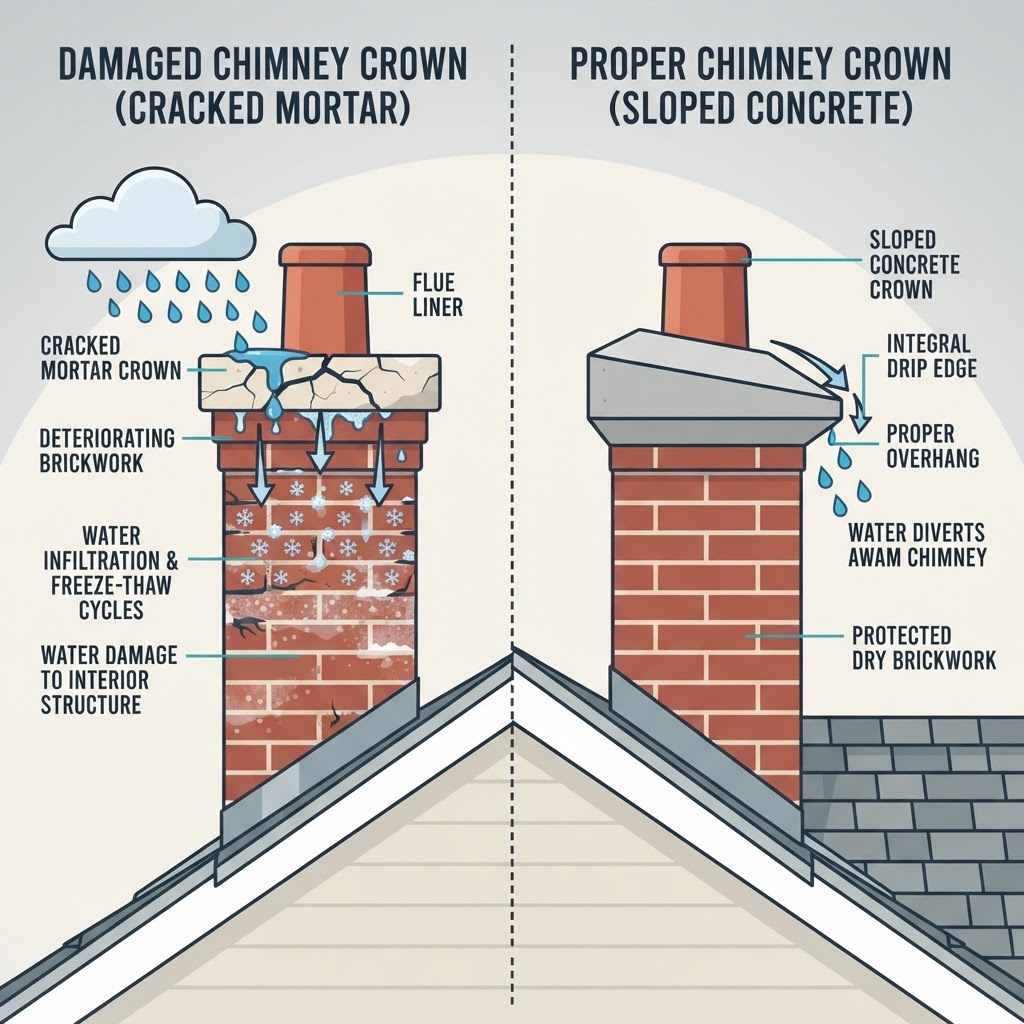
Tacoma receives an average of roughly 39 inches of rainfall each year, leaving exterior masonry structures thoroughly soaked for months on end. Positioned at the very top of your chimney stack, the chimney crown serves as the primary umbrella for your masonry, designed to deflect driving precipitation away from the underlying brickwork and flue.
When November through February arrives in the South Sound, temperatures regularly fluctuate across the freezing mark (32°F). Porous mortar and concrete absorb lingering rainwater, and when temperatures drop overnight, that trapped water expands by approximately nine percent. This internal pressure forces tiny fissures into wide fractures across the crown slab, creating a recurring cycle of decay that rapidly worsens with each passing winter.
- Persistent PNW rainfall saturates unsealed mortar and concrete.
- Overnight temperature drops trigger repeated freeze-thaw expansion cycles.
- Micro-fractures expand, allowing moisture deeper into the chimney stack.
- Unaddressed cracks can compromise flue tiles, fireboxes, and interior attic drywall.
Recognizing Early Signs of Crown Failure in South Sound Homes
Because chimney crowns sit high above the roofline, crown deterioration often progresses unseen until interior damage emerges. Homeowners in historic neighborhoods like the North End, Stadium District, and Hilltop frequently possess older masonry chimneys constructed with plain mortar washes rather than reinforced concrete crowns, leaving them exceptionally vulnerable to rapid breakdown.
Catching the warning signs before the rainy season accelerates water intrusion can save thousands of dollars in structural chimney repair. Inspecting your chimney from the ground with binoculars or having a professional conduct a rooftop assessment will reveal whether moisture has started bypassing your top seal.
Spalling or Flaking Brickwork
When a crown fails, water runs down the exterior masonry. Bricks begin shedding their faces or crumbling, leaving piles of red dust along the roof shingles or gutters.
Interior Ceiling Stains
Damp spots, peeling paint, or brown water rings near the ceiling joists around your fireplace often point to water entering from a broken crown rather than standard roof leaks.
Efflorescence (White Chalky Powder)
Mineral salts pushed out of wet bricks create white powdery deposits on exterior chimney surfaces, indicating heavy moisture migration through the masonry structure.
Rusted Dampers or Firebox Moisture
Moisture seeping past a cracked crown travels down the flue chase, causing cast-iron dampers to seize with rust and leaving damp odors or puddles in the hearth.
Industry Standards: NFPA 211 and Proper Crown Construction
According to NFPA 211 (Standard for Chimneys, Fireplaces, Vents, and Solid Fuel-Burning Appliances), a properly built chimney crown must be constructed of weather-resistant materials, specifically a Portland-cement-based concrete mix or precast stone—never standard masonry mortar. Mortar wash shrinks as it cures, creating inherent hairline cracks that degrade quickly in damp Pacific Northwest conditions.
The Chimney Safety Institute of America (CSIA) and Washington State building standards specify that a durable crown must incorporate a minimum two-inch thickness at its thinnest edge, slope downward away from the flue, and feature an overhang of at least two to two and a half inches with a drip edge. This crucial drip edge forces stormwater to fall directly onto the roof rather than running down the vertical chimney face, safeguarding your mortar joints from saturating freeze cycles.
- Minimum 2-inch thickness of reinforced Portland-cement concrete.
- A continuous downward slope directing moisture outward.
- A 2 to 2.5-inch overhang with an integrated drip edge kerf.
- A flexible expansion joint separating the flue tile from the concrete pour to prevent thermal shock cracks.
Repair vs. Full Crown Rebuild: Evaluating Your Options
Depending on the severity of the fractures, homeowners in areas from Fircrest and University Place to Puyallup and Gig Harbor have two primary paths: an elastomeric crown resurfacing or a complete structural rebuild. If the crown remains structurally sound with only hairline fissures, an elastomeric polymer coating forms a flexible, waterproof barrier that stretches and contracts through seasonal temperature swings.
However, if the crown is broken into loose sections, missing chunks, or lifting away from the top brick course, topical coatings are merely temporary bandages. In such cases, full demolition down to sound masonry and pouring a proper reinforced concrete crown is the only lasting solution to protect your home's structural framing.
Elastomeric Crown Sealing ($250 - $600)
Ideal for hairline to 1/8-inch surface cracks on intact crowns. Involves cleaning, prepping cracks with structural mortar, and applying a flexible, vapor-permeable membrane.
Partial Crown Resurfacing ($400 - $900)
Suitable for moderate surface spalling without structural instability. Involves chiseling out damaged areas, applying a bonding agent, and laying high-strength topping mix.
Full Crown Demolition & Rebuild ($1,200 - $2,500+)
Required when the slab has shattered or lacks an overhang. Entails complete removal, building wooden edge forms, installing rebar, and pouring reinforced concrete with a drip edge.
Comprehensive Chimney Repair Costs in Pierce County
When planning a chimney repair in Tacoma, total project costs depend heavily on accessibility, chimney height, roof pitch, and whether secondary water intrusion has degraded surrounding components. Older Victorian homes in the Stadium District with steep multi-story gables require specialized roof staging or scaffolding, which can add to labor expenses.
Pairing crown repair with complementary preventive services—such as custom chase caps, flashing repairs, or siloxane-based water-repellent sealants—delivers maximum protection against Western Washington weather while reducing individual service call costs.
Counter & Step Flashing Repair
Typical local investment ranges between $300 and $800 to re-lead, reseal, or replace custom metal step flashing along the roof-to-chimney junction.
Stainless Steel Chimney Cap Installation
A durable single-flue or multi-flue stainless steel cap runs between $200 and $650, providing direct rain, spark, and debris defense over the flue opening.
Vapor-Permeable Masonry Waterproofing
Professional application of 100% breathable siloxane water repellent across the entire stack costs between $350 and $900, stopping water absorption without trapping internal vapors.
Tuckpointing & Brick Restoration
Grinding damaged joints and repointing deteriorated mortar beneath a compromised crown typically ranges from $500 to $2,000 depending on total square footage.
Long-Term Protection Strategies for South Sound Chimneys
Once your chimney repair is complete, adopting a proactive maintenance routine is critical given Western Washington's relentless moisture. Even high-grade concrete crowns benefit from annual visual assessments every autumn before the freezing winds off Commencement Bay drop temperatures below the dew point.
Routine chimney sweeps and Level 1 or Level 2 NFPA 211 chimney inspections catch minuscule stress fractures before water penetrates the smoke chamber. By sealing masonry joints and maintaining an impervious crown and cap assembly, Tacoma homeowners can ensure safe hearth fires and keep repair bills minimal for decades to come.
- Schedule an annual autumn inspection before seasonal freeze-thaw cycles commence.
- Ensure roof gutters and downspouts direct stormwater completely away from chimney footings.
- Keep overhanging fir, cedar, and maple branches trimmed back to allow masonry to dry out.
- Reapply breathable siloxane waterproofing membranes every 5 to 7 years.
Frequently Asked Questions
Can I just patch my cracked chimney crown with standard roof caulk or silicone?
Standard roof tar, silicone, or hardware-store caulk are not rated for masonry thermal expansion or intense PNW rain. These materials degrade rapidly under UV exposure, pulling away within months and trapping water underneath, which accelerates freeze-thaw cracking. NFPA 211-compliant repairs require specialized elastomeric crown coatings or hydraulic mortar.
Why do so many older homes in Tacoma have mortar washes instead of concrete crowns?
Many historic homes in Tacoma neighborhoods like the North End, Proctor, and South Tacoma were built when masons commonly spread leftover brick mortar over the chimney top as a cost-cutting measure. While inexpensive, mortar washes lack aggregate strength, shrinkage control, and overhangs, making them highly susceptible to Western Washington's wet freeze cycles.
Can chimney crown repairs be performed during rainy winter months in Washington?
Yes, but they require careful weather coordination. Elastomeric sealants and concrete crowns need dry surfaces and ambient temperatures above 40°F to cure properly. Licensed chimney professionals monitor local weather windows or erect temporary weatherproof tenting and heat lamps to perform urgent winter repairs safely.
How do I know if my chimney leak is coming from the crown or the flashing?
Leaks originating from chimney flashing typically show up quickly as active ceiling drips or water stains adjacent to the attic rafters immediately after heavy rain. Crown leaks, however, saturate the brickwork gradually, often causing damp odors, flue rusting, efflorescence, or peeling paint around the firebox hours or days later. A professional camera inspection can pinpoint the exact breach.
How often should Tacoma homeowners have their chimney crown inspected?
In accordance with CSIA and NFPA 211 guidelines, chimneys should receive an inspection at least once per year. In the South Sound, scheduling this inspection during late summer or early fall gives you ample time to complete needed chimney repair work before freezing winter rain sets in.
Need Chimney Service?
Get a free, no-obligation estimate from Prime Chimney Tacoma today.