
Identifying and Treating Chimney Efflorescence in Tacoma Homes
White, powdery stains on your chimney are more than just an eyesore; they are a warning sign of moisture intrusion. Learn how to protect your Tacoma home from efflorescence damage.
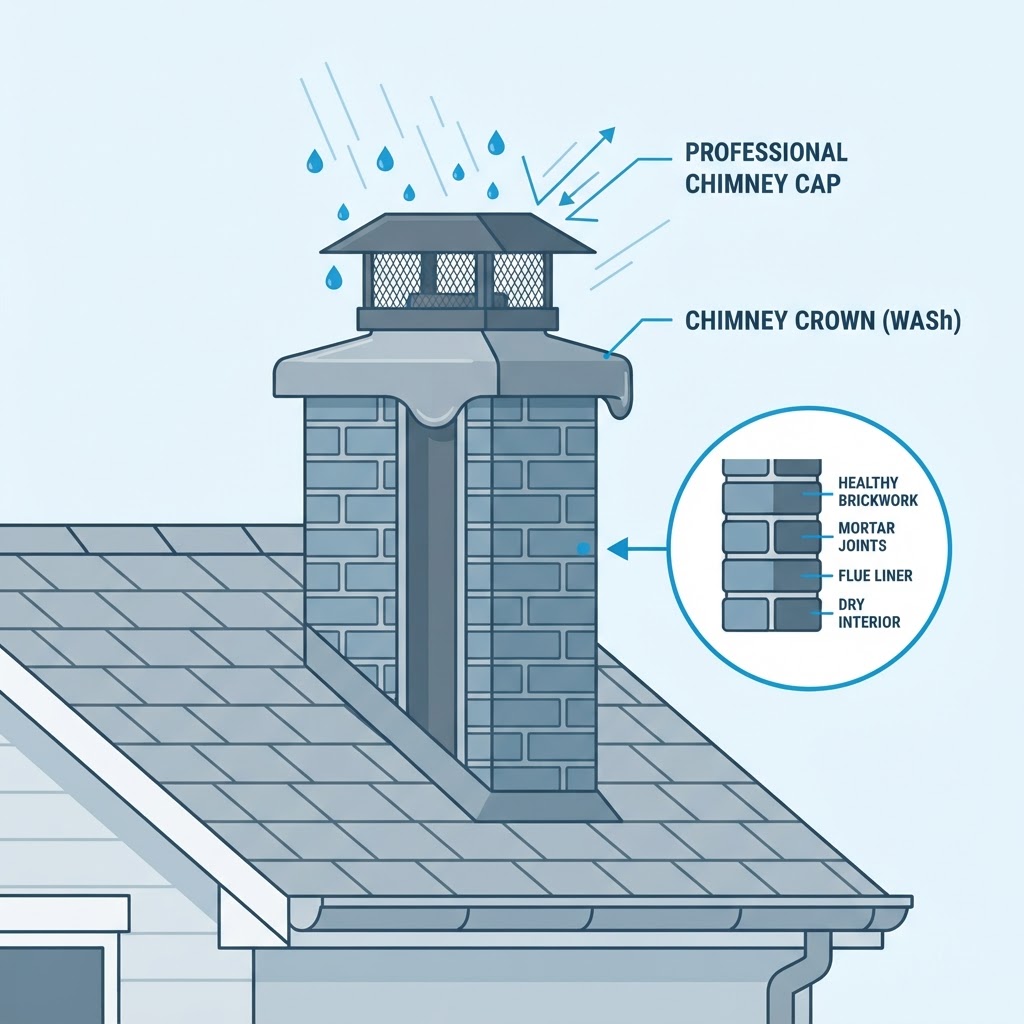
What is Efflorescence and Why Does It Appear?
If you have noticed a white, chalky, or powdery substance appearing on the exterior brickwork of your chimney, you are likely looking at efflorescence. In the Pacific Northwest, where Tacoma receives nearly 40 inches of annual rainfall, this phenomenon is common. Efflorescence occurs when water penetrates the masonry, dissolves natural soluble salts within the brick or mortar, and carries them to the surface. As the water evaporates, it leaves behind these mineral deposits.
While the white stains themselves are not inherently destructive, they are a clear indicator that your chimney is absorbing excessive moisture. If left unaddressed, this moisture can lead to more severe structural issues, especially when combined with the freeze-thaw cycles common in Western Washington winters.
- Water saturation of brick and mortar
- High humidity levels in the South Sound
- Improperly sealed masonry
- Lack of a functional chimney cap
Warning Signs of Moisture Damage
Look for white powdery residue, crumbling mortar joints, moss growth on the chimney stack, or dampness inside the firebox.
The Impact of Tacoma’s Climate on Your Chimney
Tacoma’s unique climate poses a constant challenge for masonry. During our wet winters, water seeps into the porous surfaces of your chimney. When temperatures drop below freezing, that trapped water expands, exerting immense pressure on the brick and mortar. This process, known as the freeze-thaw cycle, is the primary cause of spalling—where the face of the brick flakes off—and deep structural cracking.
Homeowners in neighborhoods like the North End, Stadium District, and University Place often see these issues accelerate due to the proximity to the Sound and increased moisture exposure. Without professional intervention, what starts as a cosmetic white stain can quickly evolve into a costly repair project.
- Freeze-thaw damage to mortar joints
- Spalling brick faces
- Deterioration of the chimney crown
- Increased risk of interior water leaks
Typical Repair Cost Ranges
Professional masonry sealing: $300–$800; Chimney crown repair: $400–$1,200; Tuckpointing (mortar repair): $500–$2,500 depending on scope.
Why Simple Cleaning Isn't Enough
Many homeowners attempt to scrub away efflorescence with wire brushes or harsh chemicals. While this may improve the appearance temporarily, it does nothing to address the root cause: water intrusion. In fact, improper cleaning methods can sometimes damage the protective outer layer of the brick, making it even more susceptible to future moisture absorption.
According to CSIA standards, the focus should always be on prevention and structural integrity. If you see efflorescence, it is time to schedule a professional chimney inspection to determine where the water is entering the system—whether through a cracked crown, damaged flashing, or porous masonry.
- Avoid high-pressure washing which can force more water into the brick
- Do not use acidic cleaners without professional guidance
- Focus on identifying the source of the leak first
Professional Assessment Steps
1. Visual inspection of the crown and flashing. 2. Moisture testing of the masonry. 3. Evaluation of the flue liner integrity.
Preventing Future Damage with Professional Waterproofing
Once the source of the moisture is identified and repaired, the most effective way to protect your chimney is through the application of a professional-grade, vapor-permeable waterproofing agent. Unlike standard paint or sealers, these specialized products allow the chimney to 'breathe,' letting trapped moisture escape while preventing liquid water from entering.
For residents in areas like Lakewood, Puyallup, and Gig Harbor, where wind-driven rain is common, this extra layer of protection is vital. It acts as a shield against the elements, significantly extending the lifespan of your masonry and preventing the cycle of efflorescence from repeating.
- Use only breathable, siloxane-based water repellents
- Ensure the chimney crown is properly sealed
- Install a stainless steel chimney cap to prevent top-down water entry
Maintenance Tip
Schedule an annual inspection before the rainy season begins to ensure your chimney is ready for the Pacific Northwest winter.
Compliance with NFPA 211 Standards
The National Fire Protection Association (NFPA) 211 standard emphasizes the importance of maintaining the structural integrity of chimneys to prevent fire hazards and carbon monoxide leaks. Efflorescence is often a 'red flag' that the masonry is no longer performing its job of protecting the interior flue.
By addressing these issues early, you ensure your home remains compliant with local building codes and, more importantly, safe for your family. Prime Chimney Tacoma provides expert diagnostics to ensure your fireplace system meets these rigorous safety standards.
- Regular inspections as per NFPA 211 guidelines
- Verification of flue liner integrity
- Ensuring proper clearance from combustibles
Why Choose Prime Chimney?
We are licensed, insured, and dedicated to serving the South Sound with honest, expert chimney care. Call 253-322-6642.
Frequently Asked Questions
Is efflorescence harmful to my chimney?
The white salt itself is not harmful, but it is a symptom of a larger problem: water saturation. If left untreated, the moisture causing the efflorescence will lead to spalling, mortar decay, and structural damage.
Can I just wash the white stains off?
You can clean the surface, but the stains will return if you don't stop the water from entering the brick. It is better to have a professional identify the leak source first.
How often should I have my chimney inspected in Tacoma?
Given our wet climate, we recommend an annual inspection to check for water intrusion, creosote buildup, and masonry damage before the winter heating season.
Does my homeowners insurance cover chimney water damage?
Generally, insurance covers sudden, accidental damage, but not damage resulting from long-term neglect or lack of maintenance. Regular professional inspections are your best defense.
Need Chimney Service?
Get a free, no-obligation estimate from Prime Chimney Tacoma today.