
Preventing Chimney Crown Damage in Tacoma's Wet Climate
Tacoma's heavy rainfall and freeze-thaw cycles can wreak havoc on your chimney crown. Learn how to spot early signs of damage and protect your home's masonry.
Why Tacoma's Climate is Hard on Chimney Crowns
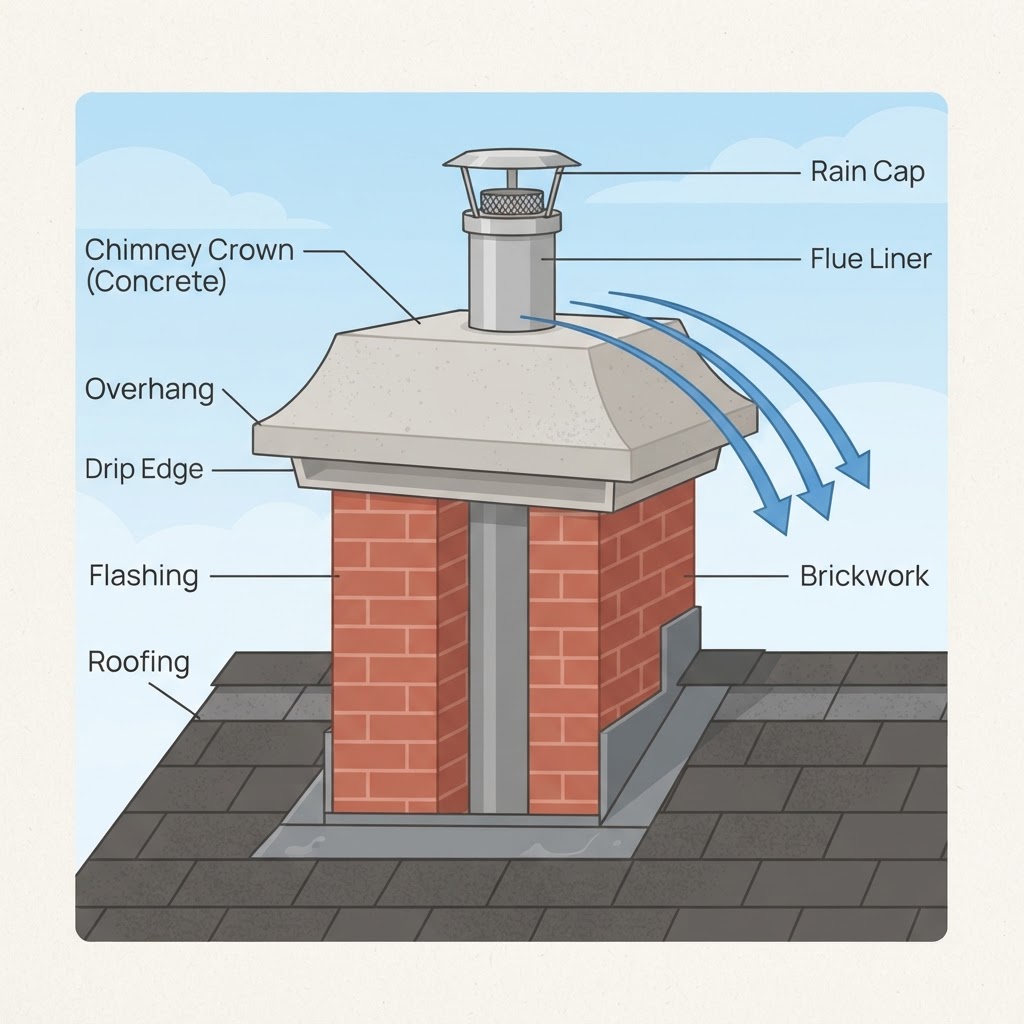
In Tacoma, our chimneys face a relentless battle against the elements. With an average of 39 inches of rainfall annually, moisture is the primary enemy of your chimney's structural integrity. The chimney crown—the concrete slab at the very top of your chimney—is designed to act as a roof, shedding water away from the flue and the masonry below.
When the crown develops even hairline cracks, water seeps into the porous concrete. During our Pacific Northwest winters, temperatures often fluctuate around the freezing point. This creates a dangerous freeze-thaw cycle: water inside the cracks freezes and expands, forcing the cracks wider and eventually causing chunks of concrete to break off, a process known as spalling.
- Constant exposure to high humidity and heavy rain
- Frequent freeze-thaw cycles in winter months
- Growth of moss and algae in damp, shaded areas
- Thermal expansion and contraction from fireplace heat
Warning Signs of Crown Damage
Look for crumbling concrete at the top of the chimney, water stains on your attic ceiling, or loose mortar joints near the roofline.
The Importance of NFPA 211 Standards
The National Fire Protection Association (NFPA) 211 standard is the benchmark for chimney safety in the United States. It emphasizes that all components of a chimney system, including the crown, must be maintained in sound condition to prevent fire hazards and water intrusion.
A damaged crown is not just a masonry issue; it is a safety risk. If the crown fails, water can enter the chimney structure, corroding metal liners and weakening the internal masonry. According to CSIA guidelines, a properly constructed crown should have a sufficient overhang and a drip edge to ensure water is directed away from the chimney walls.
- Ensure the crown is constructed of high-quality, reinforced concrete
- Maintain a proper overhang to protect the chimney brickwork
- Seal cracks immediately to prevent water infiltration
- Schedule annual inspections to catch deterioration early
Estimated Repair Costs
Minor crown sealing typically ranges from $250–$600, while a full crown rebuild or replacement can cost $800–$2,500 depending on the chimney size and accessibility.
Protecting Your Home Across the South Sound
Whether you live in a historic home in the Stadium District or a newer build in University Place, your chimney crown is susceptible to the same environmental pressures. In neighborhoods like the North End or Ruston, where coastal humidity is particularly high, we often see accelerated wear on masonry components.
Our team at Prime Chimney Tacoma understands the specific needs of South Sound homes. We provide tailored solutions, from applying breathable, high-performance water repellents to full crown reconstruction, ensuring your chimney remains a protective barrier against the wet Washington weather.
- Serving Tacoma, Lakewood, Puyallup, and Gig Harbor
- Expert diagnosis of moisture-related masonry issues
- Use of professional-grade, weather-resistant materials
- Licensed and insured service for your peace of mind
Why Professional Repair Matters
DIY fixes with standard caulk often fail because they aren't designed for the high heat and extreme moisture cycles of a chimney environment.
Preventive Maintenance Strategies
The best way to avoid a costly chimney rebuild is through proactive maintenance. An annual chimney inspection allows our technicians to identify small cracks before they become structural failures. We recommend checking your crown every autumn before the heavy rains of November and December arrive.
In addition to crown repair, we often recommend installing a high-quality stainless steel chimney cap. A cap provides an extra layer of protection, preventing rain from entering the flue directly and shielding the crown from some of the direct impact of our frequent storms.
- Annual visual inspections of the chimney exterior
- Application of professional-grade masonry water repellent
- Installation of a stainless steel chimney cap
- Prompt repair of any identified mortar or concrete cracks
Maintenance Checklist
Schedule your inspection in late summer or early fall to ensure your chimney is ready for the wet winter season.
Frequently Asked Questions
How often should I have my chimney crown inspected?
We recommend an annual inspection, especially in Tacoma's climate, to catch moisture-related damage before it leads to expensive structural repairs.
Can I fix a cracked chimney crown with store-bought caulk?
Standard caulk is not designed for the high heat and extreme weather conditions of a chimney. It will likely crack or peel quickly. Professional masonry sealants are required for a lasting repair.
Does a chimney cap help protect the crown?
Yes, a properly installed chimney cap helps deflect rain away from the flue and provides some protection to the crown, reducing the amount of direct water exposure.
What is the difference between a chimney crown and a chimney cap?
The crown is the concrete slab at the top of the masonry chimney that sheds water. The cap is the metal cover that sits above the flue opening to keep out rain, debris, and animals.
Need Chimney Service?
Get a free, no-obligation estimate from Prime Chimney Tacoma today.