
Preventing Chimney Crown Deterioration in Tacoma's Wet Climate
Tacoma's heavy rainfall and freeze-thaw cycles can wreak havoc on your chimney crown. Learn how to spot early signs of damage and protect your home from costly water intrusion.
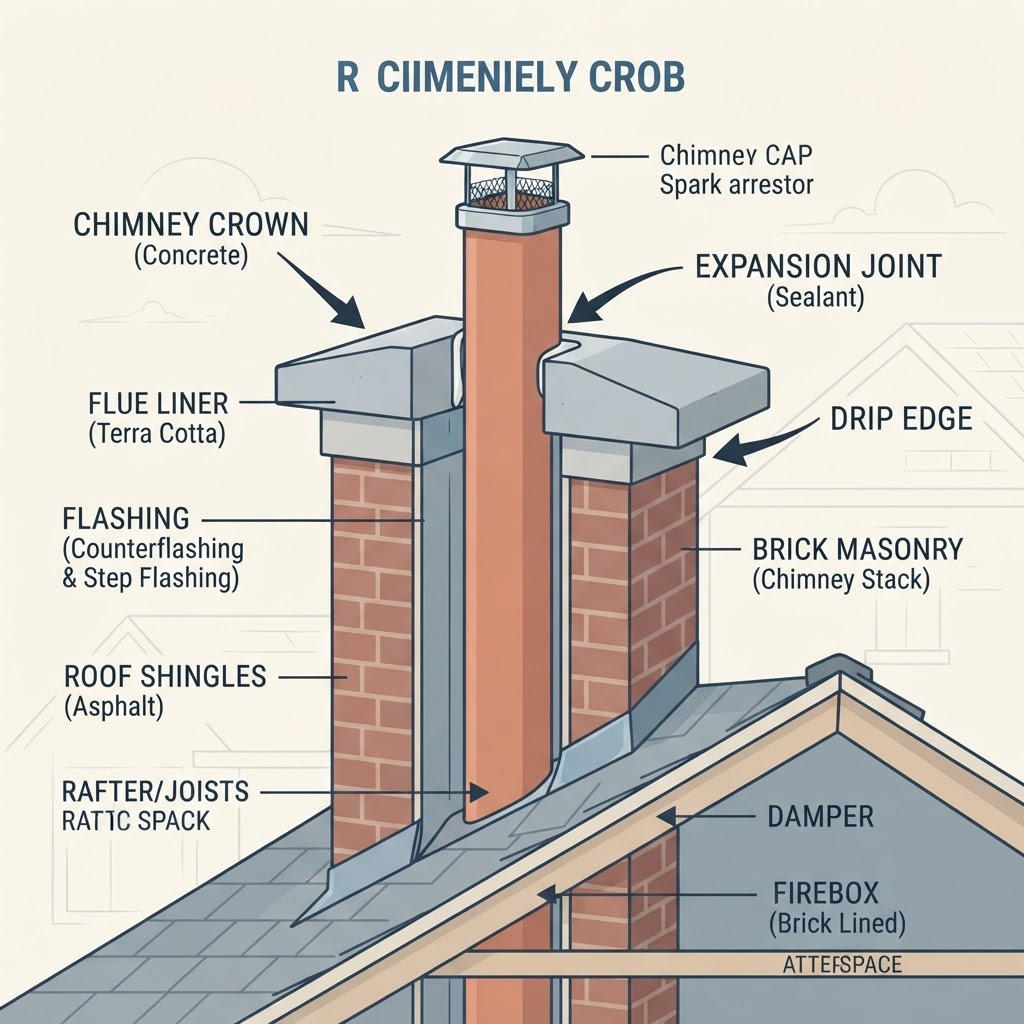
Why Tacoma's Climate is Hard on Chimney Crowns
In Tacoma and the surrounding South Sound area, our chimneys face a constant battle against moisture. With an average annual rainfall of nearly 39 inches, masonry structures are frequently saturated. When temperatures drop during Western Washington winters, the water trapped inside porous brick and mortar expands as it freezes, leading to the dreaded freeze-thaw cycle.
The chimney crown—the concrete slab at the very top of your chimney—is the first line of defense against this moisture. If the crown is cracked or improperly sloped, water seeps into the chimney structure, causing spalling bricks, mortar erosion, and even damage to your interior flue liner. Protecting this top surface is essential for the longevity of your entire fireplace system.
- Constant exposure to Pacific Northwest rain
- Expansion and contraction from freeze-thaw cycles
- Moss and organic growth retention
- Structural stress on the chimney stack
Warning Signs of Crown Damage
Look for visible cracks on the top surface, crumbling mortar around the flue, water stains on your ceiling near the chimney, or rust appearing on your chimney cap.
Understanding NFPA 211 and Proper Crown Construction
According to NFPA 211 standards, a chimney crown must be constructed of a durable, weather-resistant material—typically concrete—and designed to shed water away from the flue. Many older homes in neighborhoods like the North End or Stadium District may have crowns made of standard mortar, which is not designed to withstand the constant moisture of our region.
A professional crown should feature a proper overhang of at least 1.5 inches to act as an umbrella, preventing water from running down the sides of the masonry. Furthermore, an expansion joint must be present between the flue liner and the crown to allow for thermal expansion. Without this, the heat from your fireplace can cause the crown to crack from the inside out.
- Must be constructed of concrete, not mortar
- Requires a minimum 1.5-inch overhang
- Must include a drip edge to prevent water migration
- Requires an expansion joint for thermal safety
Professional Tip
If your crown is flat, water will pool on top. A properly sloped crown is the most effective way to ensure water sheds away from the chimney stack.
Cost of Chimney Crown Repairs in the South Sound
Addressing crown damage early is significantly more affordable than waiting for a full chimney rebuild. In Tacoma, minor repairs such as sealing small cracks or applying a breathable waterproof sealant can often be completed for a few hundred dollars. However, if the crown has deteriorated to the point of crumbling, a full replacement or resurfacing may be required.
We recommend annual inspections to catch these issues before they escalate. By keeping the crown sealed and the masonry protected, you avoid the 'domino effect' where a small crack leads to thousands of dollars in interior water damage or structural masonry repairs.
- Minor crack sealing: $150 – $550
- Crown resurfacing or repair: $425 – $1,500+
- Full crown replacement: $1,000 – $3,000
- Waterproof sealant application: $320 – $795
Cost-Benefit Analysis
Spending $400 on a professional crown repair today can save you over $3,000 in future masonry rebuilds or water damage remediation.
The Importance of Professional Inspection
Because the chimney crown is located at the highest point of your home, it is often overlooked by homeowners in areas like University Place, Lakewood, and Gig Harbor. A CSIA-certified technician can perform a thorough visual inspection to identify hidden cracks or signs of water entry that aren't visible from the ground.
During a professional inspection, we don't just look at the crown; we evaluate the entire system, including the flashing and the chimney cap. If your flashing is failing, water can bypass the crown entirely and enter your home. A comprehensive inspection ensures that all components are working together to keep your home dry.
- Visual inspection of crown integrity
- Check for proper flue expansion joints
- Evaluation of chimney flashing and seals
- Assessment of overall masonry health
Inspection Standard
We follow NFPA 211 guidelines to ensure your chimney system meets safety standards for ventilation and structural integrity.
Preventative Maintenance for Tacoma Homeowners
Beyond repairs, preventative maintenance is the best way to extend the life of your chimney. Applying a high-quality, breathable masonry water repellent is highly recommended for our climate. Unlike paint or non-breathable sealers, these products allow moisture vapor to escape from the brick while preventing liquid water from entering.
If you live in a historic home in the Hilltop or Eastside areas, regular maintenance is even more critical. Older masonry is often more porous and susceptible to the damp conditions of the Pacific Northwest. By staying proactive with annual cleanings and inspections, you can preserve the character and safety of your home for years to come.
- Schedule annual chimney inspections
- Apply breathable masonry water repellent
- Ensure a stainless steel chimney cap is installed
- Clear debris from the roof and chimney area
Maintenance Schedule
Inspect your crown every autumn before the heavy winter rains begin to ensure your home is prepared for the wet season.
Frequently Asked Questions
How do I know if my chimney crown is damaged?
Common signs include visible cracks on the top concrete surface, crumbling mortar, rust on your chimney cap, or water leaking into your fireplace during heavy rain.
Can I just patch a cracked crown with mortar?
No. Standard mortar is not designed for the top of a chimney and will crack again quickly. Professional repairs require specialized, flexible, and breathable crown-sealing compounds or concrete mixtures.
How often should I have my chimney crown inspected?
We recommend an annual inspection, ideally in the late summer or early fall, to ensure your chimney is ready for the wet Tacoma winter.
Does a chimney cap protect the crown?
A chimney cap protects the flue opening from rain and animals, but it does not cover the entire crown. You still need a sound, properly sloped crown to protect the masonry stack itself.
Need Chimney Service?
Get a free, no-obligation estimate from Prime Chimney Tacoma today.