Preventing Chimney Liner Corrosion in Tacoma's Wet Climate
Tacoma's heavy rainfall and humidity can accelerate chimney liner corrosion. Learn how to protect your flue and ensure your fireplace remains safe for the winter season.
Understanding Chimney Liner Corrosion in the South Sound
In Tacoma, our unique climate presents a constant challenge for chimney health. With over 39 inches of annual rainfall and high humidity levels, moisture is the primary enemy of your chimney system. When moisture enters your flue, it reacts with the acidic byproducts of wood combustion—such as creosote and soot—to create a corrosive environment that can rapidly degrade your chimney liner.
Whether you live in a historic home in the Stadium District or a newer build in University Place, your chimney liner acts as the critical barrier between hot combustion gases and your home's structure. If this liner corrodes, it loses its ability to safely vent smoke and heat, creating significant fire and carbon monoxide risks.
- Increased moisture from Pacific Northwest rain
- Chemical reactions between water and acidic creosote
- Freeze-thaw cycles causing expansion and contraction
- Inadequate ventilation leading to condensation buildup
Why Liners Fail
Corrosion occurs when acidic moisture sits on the liner surface, eating away at clay tiles or metal surfaces, eventually leading to cracks or holes.
Signs Your Chimney Liner Needs Attention
Identifying liner damage early is essential to avoiding expensive structural repairs. Homeowners in areas like North End, Hilltop, and Lakewood should be vigilant for specific warning signs that indicate the integrity of the flue may be compromised.
If you notice any of the following, it is time to schedule a professional inspection to assess the condition of your liner before the next heavy rainstorm.
- Visible pieces of clay tile in the firebox or ash pit
- Smoke spilling back into the room during use
- Water stains on the interior walls near the chimney breast
- A strong, musty odor emanating from the fireplace
Warning Signs
If you see debris in your firebox or experience smoke backup, your liner may already be failing. Do not use the fireplace until it is inspected.
The Role of NFPA 211 Standards
The National Fire Protection Association (NFPA) 211 standard is the benchmark for chimney safety. It mandates that chimneys be inspected annually to ensure they are free of obstructions and structural defects. In Tacoma, where our wet weather accelerates degradation, adhering to these standards is not just a recommendation—it is a necessity for home safety.
A professional inspection involves a thorough look at the flue's interior. According to CSIA guidelines, if a liner is found to be cracked, corroded, or missing, it must be repaired or replaced to meet current building codes before the fireplace can be safely operated again.
- Annual inspections are required by NFPA 211
- Damaged liners must be repaired to prevent fire hazards
- Professional assessment ensures compliance with local codes
Safety First
NFPA 211 standards exist to protect your family from fire and carbon monoxide. Regular inspections are the best way to maintain compliance.
Preventative Measures for Tacoma Homeowners
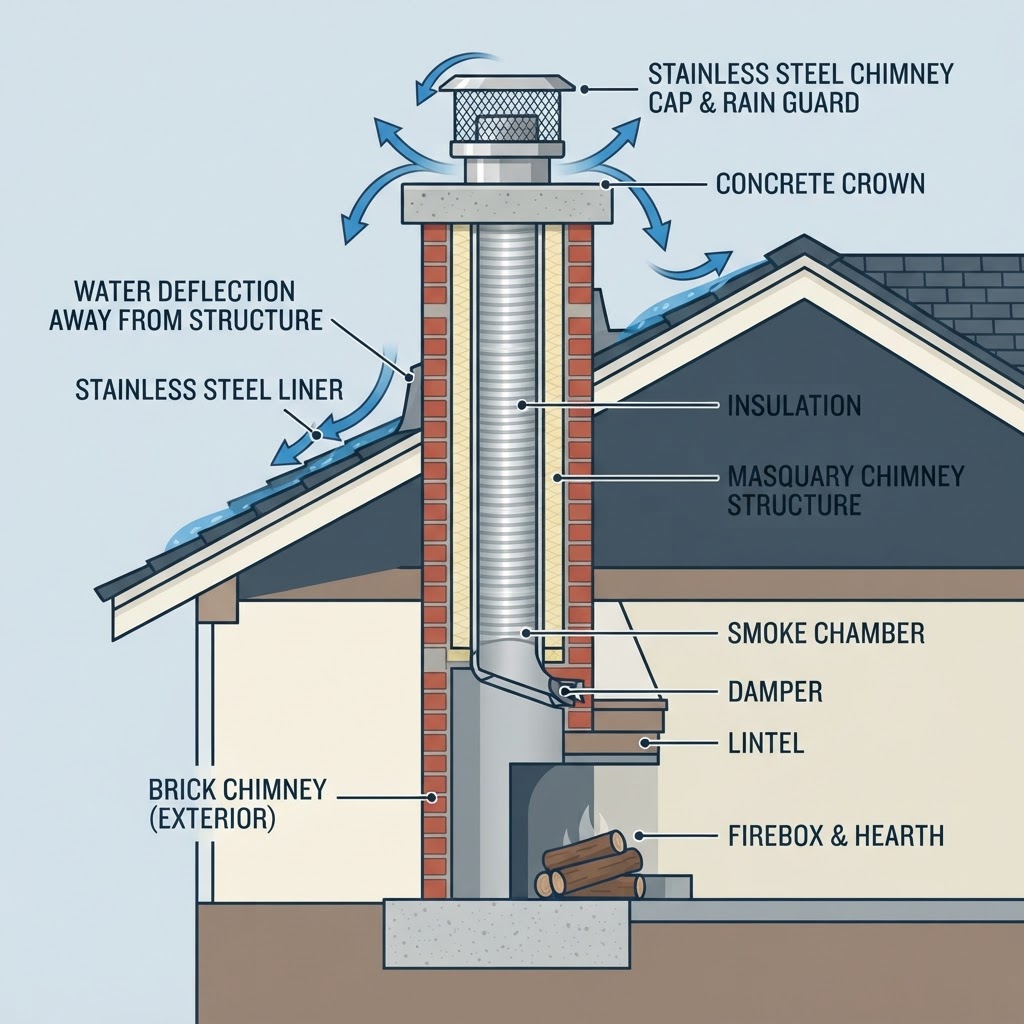
The most effective way to prevent liner corrosion is to stop moisture at the source. Installing a high-quality, stainless steel chimney cap is the single most effective upgrade for a Tacoma home. A cap prevents rain from entering the flue directly and keeps out debris and animals that can trap moisture.
Additionally, ensuring your chimney crown is sealed and that your flashing is properly installed will prevent water from seeping into the masonry and reaching the liner. For those in Puyallup, Gig Harbor, or Federal Way, professional waterproofing treatments can also provide an extra layer of defense against our damp climate.
- Install a stainless steel chimney cap
- Repair cracked chimney crowns
- Ensure flashing is watertight
- Apply breathable masonry water repellent
Estimated Costs
Chimney cap installation typically ranges from $150-$400, while professional flashing repair can cost between $200-$600 depending on the complexity.
Professional Solutions for Liner Restoration
If your inspection reveals that your liner has already succumbed to corrosion, don't panic. Modern solutions allow for the installation of stainless steel liners that are highly resistant to the acidic byproducts of wood burning and the moisture-heavy environment of the Pacific Northwest.
Our team at Prime Chimney Tacoma specializes in restoring chimney systems to meet modern safety standards. We provide honest assessments and durable solutions tailored to the specific needs of your home, whether you are in the West End or Eastside.
- Stainless steel liner installation
- Custom-fit solutions for masonry chimneys
- Workmanship backed by local expertise
- Full system safety verification
Why Choose Us
We are licensed and insured professionals serving the South Sound. We prioritize safety and long-term durability in every repair.
Frequently Asked Questions
How often should I have my chimney liner inspected in Tacoma?
The CSIA and NFPA 211 recommend an annual inspection. Given Tacoma's high rainfall, an annual check is critical to catch moisture-related corrosion before it becomes a major repair.
Can I see the liner damage myself?
Most liner damage occurs in the upper or middle sections of the flue, which are not visible from the fireplace opening. Professional technicians use specialized cameras to inspect the entire length of the liner.
What is the cost of replacing a chimney liner?
The cost varies based on the height of the chimney and the type of liner required. Generally, homeowners should budget for a professional assessment to get an accurate quote, as every chimney structure is unique.
Does a chimney cap really prevent liner corrosion?
Yes. A chimney cap prevents direct rain entry and keeps debris out. By keeping the flue dry, you significantly reduce the conditions that lead to acidic corrosion of the liner.
Need Chimney Service?
Get a free, no-obligation estimate from Prime Chimney Tacoma today.