
Understanding and Preventing Chimney Spalling in Tacoma Homes
Discover why chimney spalling occurs in Tacoma's damp climate and how professional masonry repair can protect your home's structural integrity.
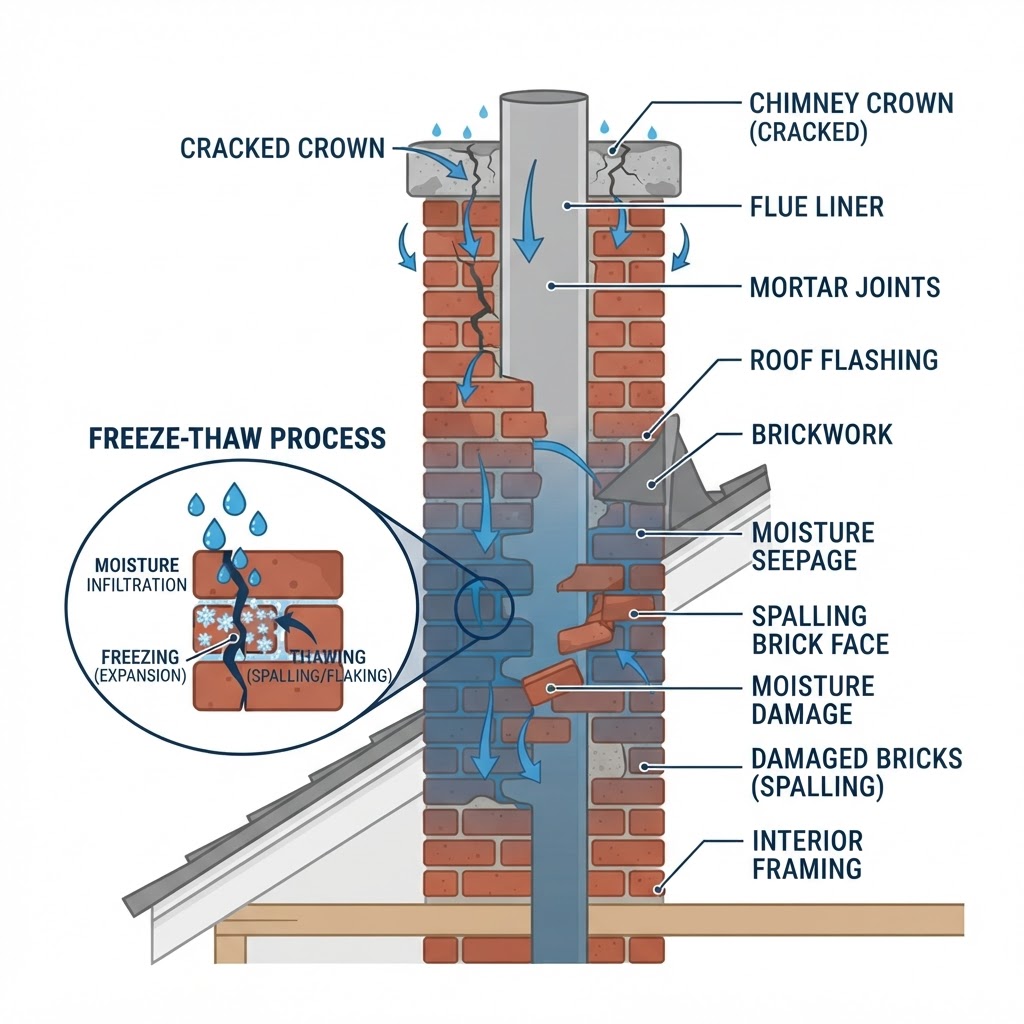
What is Chimney Spalling?
Chimney spalling is a common masonry issue where the outer surface of bricks begins to peel, pop off, or flake away. In Tacoma, this is often the result of moisture intrusion followed by the rapid expansion and contraction caused by our local freeze-thaw cycles. When water enters the porous brick, it expands as it freezes, exerting internal pressure that eventually forces the face of the brick to break off.
If left untreated, spalling is more than just an aesthetic eyesore. It compromises the structural integrity of your chimney, exposing the inner core to further water damage and potentially leading to expensive, large-scale masonry rebuilds. For homeowners in neighborhoods like the North End or the Stadium District, where historic brick chimneys are common, addressing spalling early is vital for preservation.
- Visible flaking or peeling of brick faces
- Piles of brick fragments at the base of the chimney
- Cracked or crumbling mortar joints
- White, powdery salt deposits (efflorescence) on the masonry
Why Tacoma's Climate Matters
With nearly 39 inches of annual rainfall, Tacoma chimneys are constantly saturated. When temperatures drop below freezing, that trapped moisture expands, causing the brick face to 'spall' or pop off.
The Role of Freeze-Thaw Cycles
Western Washington winters are notorious for fluctuating temperatures. A chimney that is soaked by a heavy rainstorm in the morning can be subjected to freezing temperatures by nightfall. This cycle is the primary driver of masonry deterioration in the South Sound area.
According to CSIA standards, maintaining a dry chimney system is the most effective way to prevent this damage. When the protective outer layer of a brick is lost, the remaining material becomes even more porous, accelerating the rate of decay. This is why we often see spalling worsen significantly after a particularly wet winter in areas like Lakewood or University Place.
- Moisture absorption during rainy months
- Expansion of water during freezing nights
- Structural weakening of the brick face
- Increased vulnerability to future water intrusion
Warning Signs of Damage
Look for missing brick faces, loose mortar, or damp patches on your interior walls near the chimney breast. These are clear indicators that your masonry needs professional attention.
Professional Repair and Prevention
Repairing spalled bricks typically involves replacing the damaged units and repointing the surrounding mortar joints. In some cases, if the damage is widespread, a professional masonry repair may be required to ensure the chimney remains stable. Following repairs, applying a professional-grade, breathable water repellent is essential to prevent future moisture absorption.
Per NFPA 211 standards, all chimney repairs should be performed by qualified professionals to ensure the system remains safe for use. We recommend an annual inspection to catch early signs of spalling before they require extensive masonry work.
- Removal and replacement of damaged bricks
- Tuckpointing to restore mortar joint integrity
- Application of vapor-permeable waterproofing sealants
- Installation of a proper chimney cap to prevent top-down water entry
Estimated Repair Costs
Minor masonry repairs and repointing typically range from $425 to $1,500 depending on the surface area. Waterproofing treatments generally cost between $320 and $795.
Protecting Your Investment
Beyond just repairing the bricks, homeowners in areas like Puyallup, Gig Harbor, and Federal Way should focus on preventative maintenance. A high-quality stainless steel chimney cap is one of the most cost-effective ways to keep water out of the flue and off the crown, which is a common source of moisture that leads to spalling.
Regular maintenance not only protects your home but also ensures your fireplace operates safely. By keeping the masonry dry and the structure sound, you avoid the high costs associated with complete chimney rebuilds, which can be significantly more expensive than routine maintenance.
- Install a stainless steel chimney cap
- Schedule annual chimney inspections
- Apply breathable masonry water repellent
- Repair cracked crowns immediately
Maintenance Checklist
1. Annual visual inspection. 2. Check for loose mortar. 3. Ensure the chimney cap is secure. 4. Apply water repellent every 3-5 years.
Why Choose Prime Chimney Tacoma?
At Prime Chimney Tacoma, we understand the unique challenges that the South Sound climate poses to masonry chimneys. Our team is dedicated to providing honest, professional service to keep your home safe and your chimney in top condition.
Whether you are in the West End, Eastside, or anywhere in the Tacoma area, we are here to help with expert diagnosis and repair. We prioritize safety and quality craftsmanship in every project we undertake, ensuring your chimney stands up to the Pacific Northwest weather.
- Licensed and insured professionals
- Expertise in local climate-related damage
- Commitment to NFPA 211 safety standards
- Serving all Tacoma and South Sound neighborhoods
Contact Us Today
Don't wait for minor spalling to become a major structural issue. Call 253-322-6642 to schedule your professional chimney inspection.
Frequently Asked Questions
Can I just patch spalled bricks with cement?
No, using standard cement or mortar to patch the face of a brick is ineffective and often causes more damage. It does not bond properly and can trap moisture, leading to further spalling. Professional replacement of the brick is the correct approach.
How often should I have my chimney waterproofed in Tacoma?
Given our wet climate, we recommend applying a professional-grade, breathable water repellent every 3 to 5 years to protect your masonry from moisture absorption.
Is spalling covered by homeowners insurance?
Generally, spalling is considered a maintenance issue caused by wear and tear or environmental exposure, which is typically not covered by standard homeowners insurance. Regular maintenance is the best way to avoid these costs.
Does a chimney cap really help prevent spalling?
Yes. A chimney cap prevents rain from entering the flue and protects the chimney crown from direct water exposure, which is a major contributor to moisture-related masonry damage.
Need Chimney Service?
Get a free, no-obligation estimate from Prime Chimney Tacoma today.