
Why Chimney Flashing Leaks Are the Silent Enemy of Tacoma Homes
Tacoma's wet climate makes chimney flashing leaks a major threat to your home's structure. Learn how to spot and prevent water intrusion before it causes expensive damage.
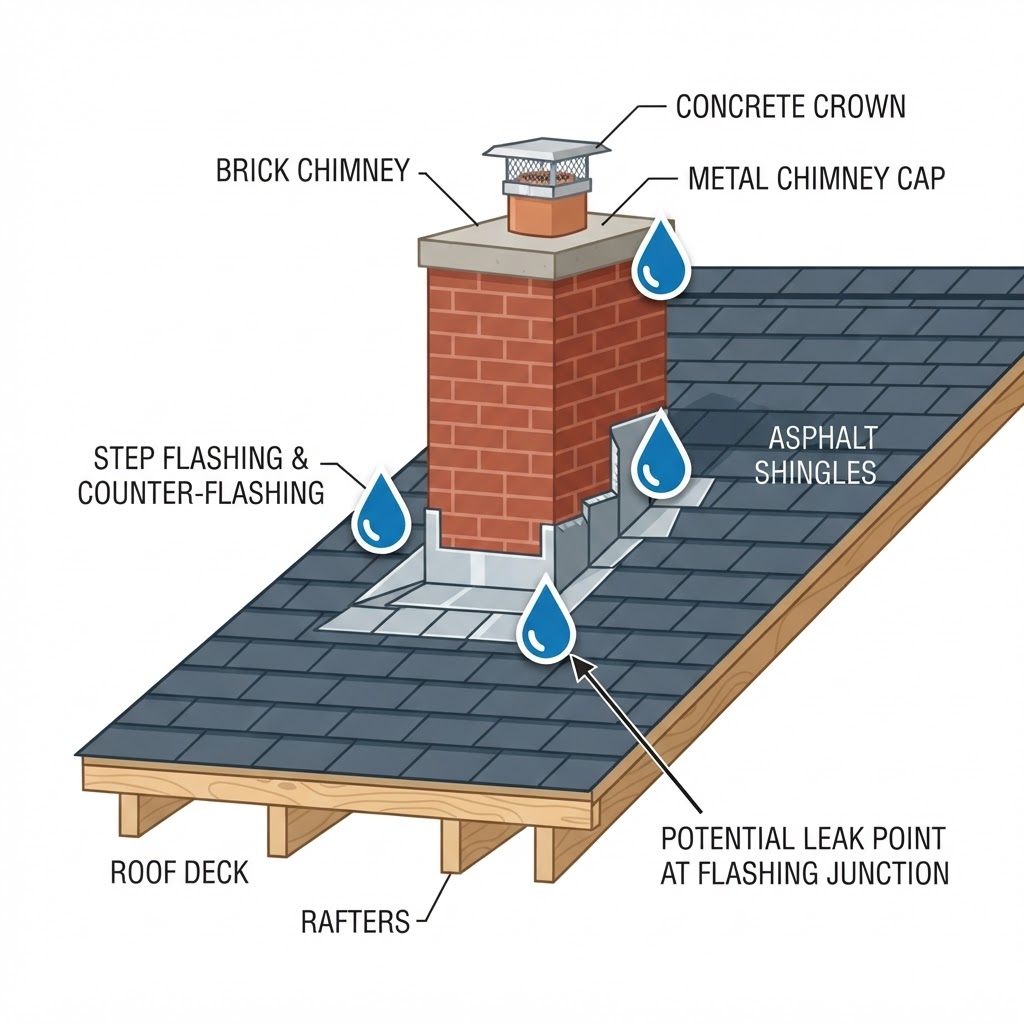
The Hidden Danger of Chimney Flashing in the South Sound
In Tacoma, where we experience nearly 40 inches of annual rainfall, your chimney is constantly battling moisture. While many homeowners focus on the brickwork or the flue, the most common point of failure is the chimney flashing—the metal strips that seal the gap where your chimney meets the roofline.
When flashing is improperly installed or begins to corrode due to our damp Pacific Northwest climate, it creates a direct path for water to enter your attic and walls. This silent enemy often goes unnoticed until you see water stains on your ceiling or notice a musty smell in your upper floors, by which time significant structural damage may have already occurred.
- Prevents water from seeping into the roof deck
- Protects attic insulation from mold and rot
- Maintains the structural integrity of the chimney base
- Essential for homes in high-moisture areas like the North End and Ruston
Warning Signs of Flashing Failure
Look for water stains on the ceiling near the chimney, dampness in the attic, rusted metal at the roof-chimney junction, or loose mortar joints at the base of the chimney.
How Tacoma's Climate Accelerates Flashing Decay
The combination of heavy rain and the freeze-thaw cycles common in Western Washington winters is brutal on metal flashing. As temperatures fluctuate, the metal expands and contracts, which can cause the sealant to crack or the fasteners to loosen over time.
Homes in neighborhoods near the water, such as the Stadium District or Browns Point, face additional challenges. The salt-heavy marine air accelerates the corrosion of galvanized steel flashing, leading to premature failure compared to inland areas like Puyallup or South Tacoma.
- Thermal expansion and contraction from seasonal temperature shifts
- Corrosive effects of salt air near Commencement Bay
- Constant moisture exposure leading to rust and sealant degradation
Typical Repair Costs
Minor flashing resealing typically costs $200–$600, while a full flashing replacement for a standard chimney ranges from $800–$2,500 depending on roof pitch and material complexity.
Professional Standards for Flashing Installation
According to NFPA 211 standards, all chimney components must be maintained to prevent fire and structural hazards. Proper flashing installation requires a two-part system: base flashing and counter-flashing. The counter-flashing is embedded into the masonry to ensure that even if the roof shifts, the seal remains intact.
Many older homes in Tacoma were built with inadequate flashing that relies solely on roofing cement. A professional repair ensures that the flashing is properly integrated with the chimney masonry, providing a long-term barrier against the South Sound's relentless rain.
- Use of high-quality, corrosion-resistant metals like stainless steel or copper
- Proper integration of counter-flashing into mortar joints
- Adherence to local building codes for weatherproofing
Why DIY Often Fails
Applying roofing tar over leaking flashing is a temporary fix that often traps moisture, accelerating rot. Professional installation ensures proper water shedding and long-term durability.
Protecting Your Investment
Regular chimney inspections are the best way to catch flashing issues before they become expensive repairs. During a professional inspection, we examine the flashing for signs of lifting, rust, or gaps in the sealant. Catching these issues early can save you thousands in potential water damage repairs to your roof deck and interior framing.
If you live in an older home in the Hilltop or Eastside areas, your flashing may be original to the house. Given the age of these structures, we highly recommend a professional assessment to ensure your chimney is still effectively shedding water.
- Schedule annual inspections before the rainy season begins
- Check attic spaces for signs of moisture after heavy storms
- Ensure your chimney cap is also in good condition to prevent internal water damage
Proactive Maintenance
A $99 inspection can identify failing flashing before it causes thousands in water damage, providing peace of mind for the upcoming winter.
Frequently Asked Questions
How do I know if my chimney flashing is leaking?
Common signs include water stains on the ceiling or walls adjacent to the chimney, a damp smell in the attic, or visible gaps between the metal flashing and the brickwork.
Can I just use caulk to fix a leaking chimney?
Caulk is a temporary fix and often fails quickly in Tacoma's wet climate. Proper repair requires professional flashing installation that integrates with the masonry.
How often should chimney flashing be inspected?
The CSIA recommends an annual inspection. In Tacoma, it is best to have this done in late summer or early fall before the heavy rains start.
Does my homeowners insurance cover flashing leaks?
Generally, insurance covers sudden, accidental damage, but not long-term wear and tear. Regular maintenance is your best defense against out-of-pocket repair costs.
Need Chimney Service?
Get a free, no-obligation estimate from Prime Chimney Tacoma today.